Selecting the best flooring for a veterinary hospital or animal shelter is one of the most critical decisions a facility owner can make.
The right floor must balance numerous demands: it needs to withstand 24/7 wear and tear, resist harsh chemicals and animal waste, prevent slips for both two- and four-legged visitors, and maintain a low-stress, acoustically friendly environment.
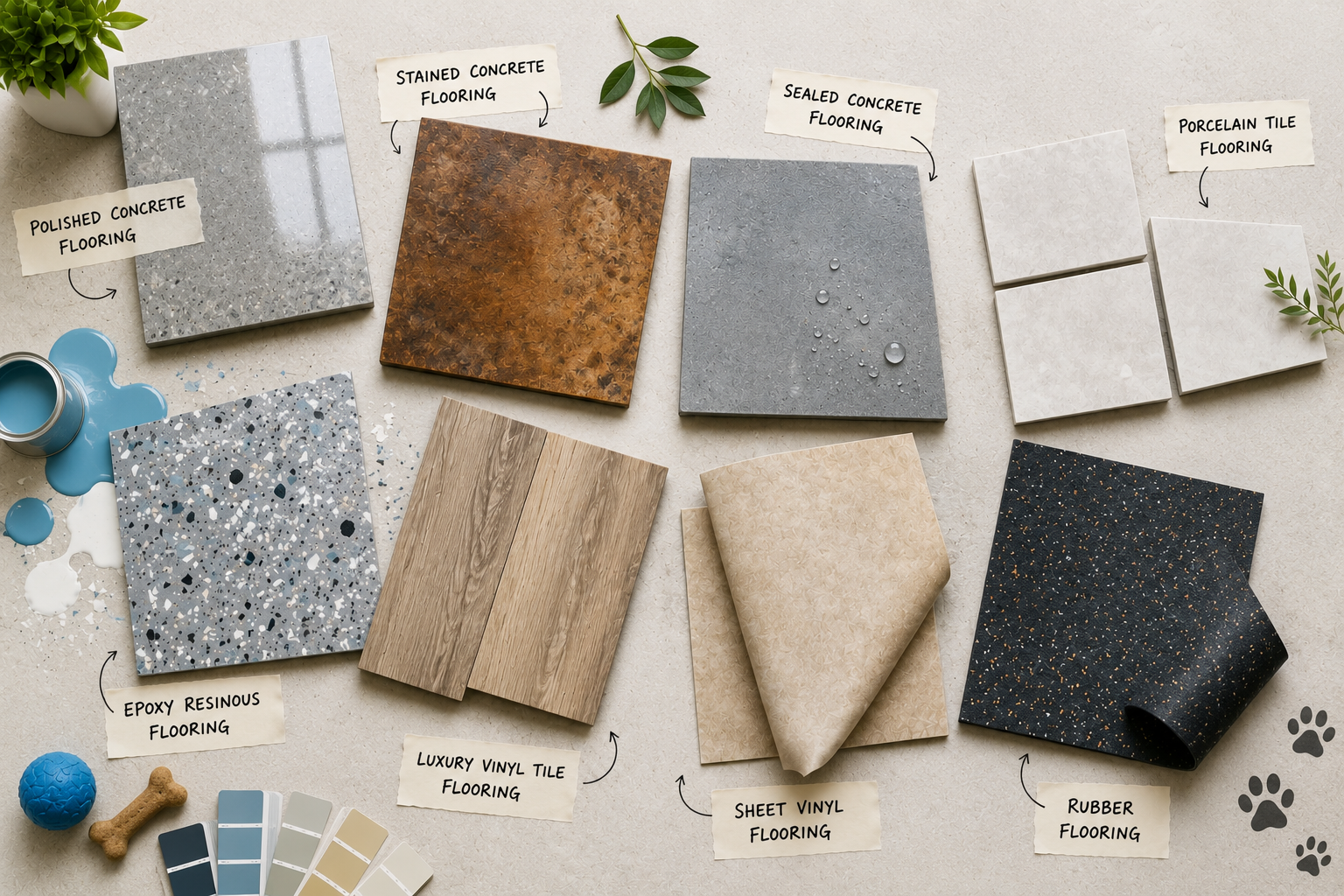
To help navigate these choices, let’s break down the performance, maintenance, safety, and ideal applications of the top commercial flooring types used in animal care architecture and interior design.
- Polished Concrete
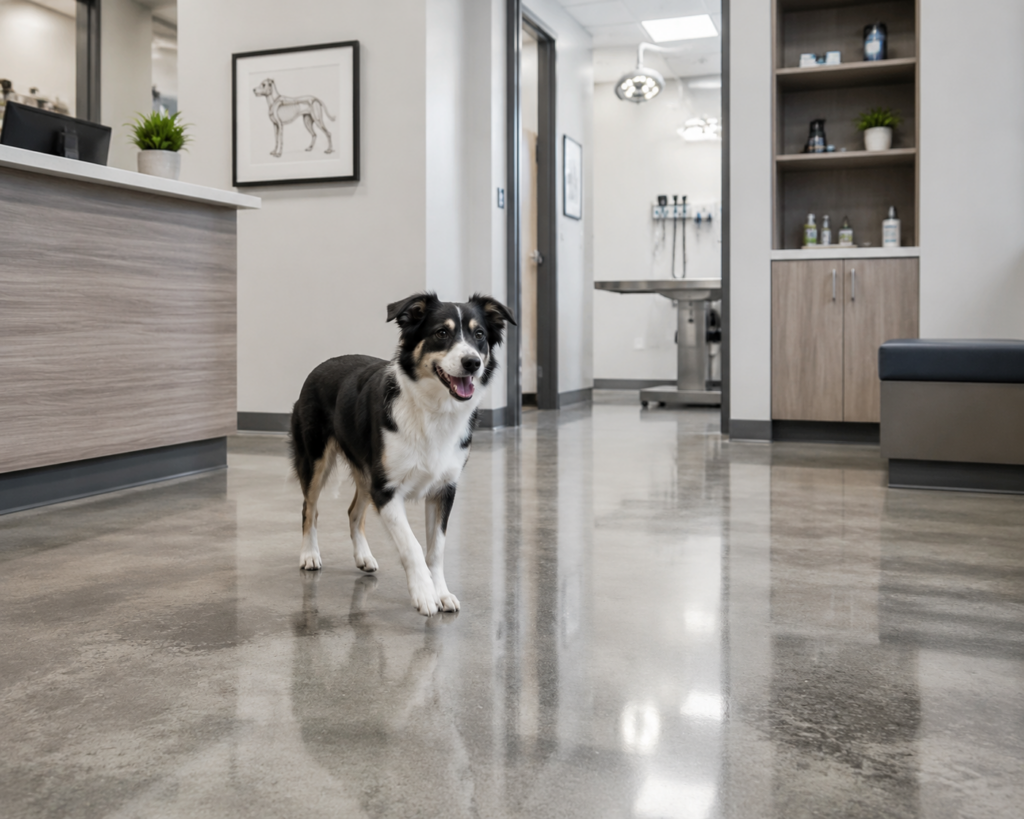
Polished concrete is a highly durable, cost-effective, and low-maintenance flooring choice. By using existing concrete slabs, it eliminates the need for extra materials, creating a modern, sleek aesthetic that lasts for decades.
Advantages
High Durability
Highly polished concrete is extremely strong and resilient. It can withstand the pressure of heavy foot traffic and equipment, making it difficult to damage and nearly impossible to chip or scratch.
Life Span
A properly installed, sealed, and maintained polished concrete floor can be expected to last 100 years or more in even the harshest commercial environments. Its life span will far surpass that of other floor coverings, such as carpet, luxury vinyl tile, or sheet vinyl.
Easy to Maintain
Polished concrete flooring is relatively easy to maintain. A daily sweep with a dust mop or broom prevents dirt accumulation, and a weekly damp mop helps remove smudges, scuffs, and watermarks while restoring its glossy finish. Maintenance requirements may vary slightly based on the finish, but overall upkeep is minimal.
Cost-Effective Over Time
Depending on the level of complexity, polished concrete floors can cost as little as $2 a square foot or as much as $30 a square foot. Most installations are very cost-effective, especially if you have an existing concrete slab that’s ready for staining or polishing.
Design Flexibility
There’s an endless variety of color and texture effects associated with this concrete finish, and it can simulate the look of dozens of pricier materials. You can also add decorative engraving and stenciled graphics to the surface.
Sanitary and Easy to Clean
Properly finished and sealed concrete is resistant to fluids, especially water. Coatings can provide waterproof barriers that seal the concrete and keep out contaminants. Some coatings can also provide anti-microbial protection.
High-quality concrete flooring should never have cracks or crevices on the surface that can trap food and dirt and harbor bacteria (This cannot be guaranteed with a remodel-type project).
High Light Reflectivity
Concrete that’s highly polished can significantly boost natural light in a space, potentially reducing the need for artificial lighting and saving on energy costs.
That degree of reflectivity will depend on the type of polish you choose, with higher gloss finishes more significantly increasing the Light Reflection Value (LRV) of a room.
Slip-Resistant
Any concrete surface can be slippery, especially in moist environments or areas prone to spills. But these concrete floorings can be sealed with a non-slip epoxy coating to add texture and prevent falls and injuries.
Chemical-Resistant
Though it may not appear so, a non-sealed concrete floor is porous. However, concrete floors can be sealed with a chemical-resistant epoxy coating to protect them against extreme chemicals (alkalis and acids) and corrosion.
Static Dissipative
An unsealed concrete floor often exhibits antistatic tendencies, although that’s always dependent upon the floor’s moisture levels. Anti-static coatings can be applied for peace of mind so that static discharge can’t cause damage to static-sensitive equipment.
No VOC Emissions
Concrete floors do not contain harmful Volatile Organic Compounds (VOC) like hardwood floors or vinyl and synthetic carpets.
A Greener Choice
Because polished concrete flooring serves as both the slab foundation and the finished floor, it minimizes materials and waste. No flooring overlay is necessary when your slab ticks all the boxes. Should a commercial concrete floor ever need to be removed, it’s composed of biodegradable materials that can be recycled for later use.
- Concrete polishing costs less than epoxy application.
- Polished concrete is typically $5 to $8 higher per square foot than a stained concrete project. That upfront cost is higher because it requires more equipment and has a more involved installation process. However, the polished concrete has the lowest overall maintenance system because it has no open pores, which resist staining and moisture.
- Polished concrete is easier to clean. Routine maintenance is basically a powered floor scrubber, a wet mop, or a neutral cleaner.
- Polished concrete floors may require rejuvenation every ten years.
(This is different from stained concrete, which uses colored chemicals applied to the concrete itself and is significantly more expensive and labor-intensive.)
Disadvantages
Project Remodels
Keep in mind that if your project is a remodel type and not a new ground-up building, the existing concrete may not have a nice, clean appearance. This would be visible for both the polished concrete & stained concrete finish floors.
Rigid Surface
The strength and durability of this material can also be a drawback. As the surface is very hard, it won’t cushion or “give” under feet, making it uncomfortable to stand on for long periods. To overcome this, you can add anti-fatigue mats to areas where employees face hours on their feet on a day-to-day basis.
Chilly Surface
Another drawback of concrete floors is that they don’t tend to retain heat very well. That means that in the winter, the surface of the flooring is going to feel cold. However, this is no different from ceramic tile or natural stone flooring.
To overcome this, you can embed radiant heating cables in concrete floors to reduce heat loss. Best of all, you’ll usually pay lower utility costs than with a forced-air system, because radiant heating consumes less energy to achieve the same level of comfort.
Moisture Risks
If concrete flooring isn’t properly finished and sealed, it becomes very susceptible to moisture penetration. If liquid manages to make its way into the pores of a concrete floor, it can sit there and lead to the growth of mold or mildew. If you have a trusted professional installing your polished concrete flooring, you shouldn’t have to worry about this.
Noise Factor
This concrete finish can be loud, much like ceramic tile, natural stone flooring, and some hardwood or bamboo floors. To reduce this noise, you can furnish the space with rugs, heavy drapes, acoustic wall panels, and other elements that absorb or block sound.
Recommended Locations:
- Hallways (front or back of house)
- Non-medical areas
- Offices
- Utility & storage areas
2 . Sealed Concrete
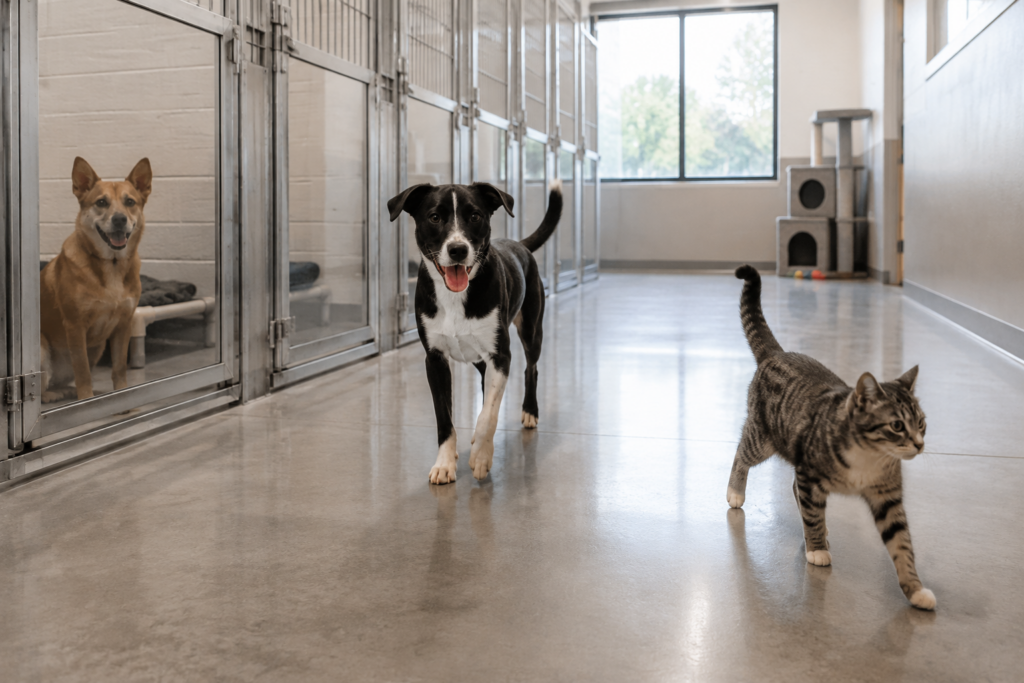
Sealed concrete is more cost-effective compared to other concrete floorings; however, sealed concrete is more susceptible to wear and tear, especially in high-traffic areas. So, we recommend having sealed concrete only in utility closets/rooms, IT closets or smaller storage rooms.
Advantages
Scratch and Dent Resistant
Concrete handles claws and heavy daily foot traffic without gouging or scratching.
Cost-Effective
It utilizes the building’s existing foundation, keeping upfront construction costs lower than fully custom resinous floors.
Stain and Chemical Barrier
High-quality sealers prevent animal waste from absorbing into the porous concrete, keeping odors at bay.
Disadvantages
Maintenance Requirements
Sealers eventually wear down under harsh, daily disinfectants, compared to polished concrete, which is highly durable. They generally need to be reapplied periodically to prevent urine from soaking into the slab.
Hard on Joints
Concrete is unforgiving and cold underfoot, making it less comfortable for elderly, arthritic, or long-staying animals without raised beds or rubber mats.
Risk of Moisture/Vapor
If the slab is not properly sealed against the ground, hydrostatic pressure can cause the sealer to peel or flake over time.
Slippability
Smooth, glossy sealers can be slippery for running animals and staff; anti-skid aggregates must be added for safety.
Maintenance
Requires periodic resealing or rewaxing (every 2 to 10 years) to maintain the protective layer.
Best Practices for Shelters
- Choose a matte/textured finish: Opt for low-gloss finishes with added slip-resistant aggregates to prevent accidents and hide scratches.
- Use safer sealers: Ensure you are using zero- or low-VOC, animal-safe sealers. Penetrating sealers are often preferred in kennels because they don’t form a film that can easily peel.
- Consider hybrid options: Use sealed concrete in low-traffic hallways or meet-and-greet rooms, and use softer options (like rubber flooring) or seamless epoxy in high-moisture kennel areas.
3. Stained Concrete
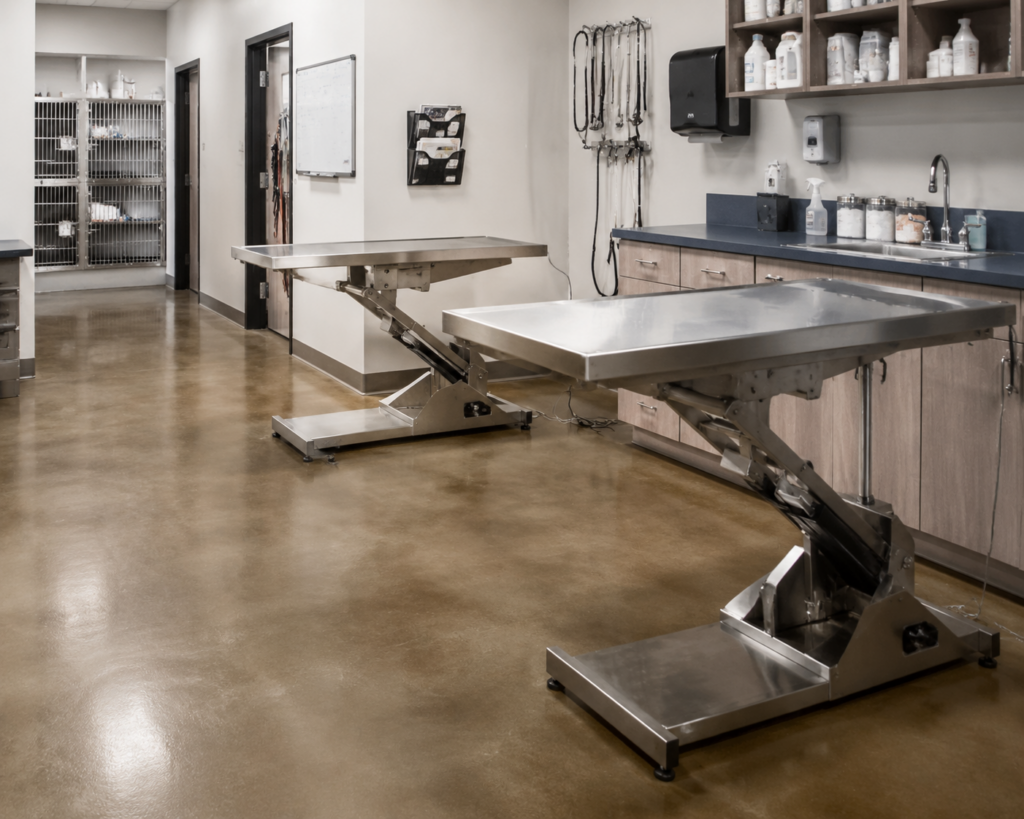
Stained concrete floors offer many benefits, from their aesthetic appeal and customization options to low maintenance and long-term durability. The decision to choose stained concrete should align with your specific needs, style preferences, and the conditions of the space.
Advantages
Variety of Colors and Visual Effects
Stained concrete floors offer a wide range of color options for a customized and unique look. Whether you prefer earthy tones, vibrant hues, or the appearance of natural stone, concrete stains provide versatility in design. Different shades and color combinations can be achieved, providing a visually appealing floor that complements your overall aesthetic.
Appearance of Natural Materials
One of the significant advantages of stained concrete floors is their ability to mimic the look of natural materials, such as marble or stone, at a fraction of the cost. The staining process can create beautiful, realistic patterns that add character and elegance,
Low Maintenance Requirements
Stained concrete floors are known for their low maintenance needs. Unlike traditional flooring materials that may require regular waxing, polishing, or special cleaning agents, stained concrete floors typically only need regular cleaning to maintain their appearance. This makes them an excellent choice for high-traffic areas in commercial spaces.
Long-Term Durability
Stained concrete floors are durable and can withstand heavy foot traffic when properly installed and sealed. The protective layer formed by the sealer adds an extra level of resistance against stains, moisture, and wear and tear, contributing to the long-term lifespan of the flooring.
Cost-Effective Option
Stained concrete floors are often more cost-effective than other flooring options, such as porcelain tile, or natural stone. The ability to transform an existing concrete slab into a decorative surface eliminates the need for additional materials and labor, making stained concrete a budget-friendly choice.
Versatility in Design
Stained concrete floors offer versatility in design, allowing for the creation of intricate patterns, borders, or artistic elements. This flexibility makes them ideal for commercial lobby spaces where the tenant or owner seeks a customized and unique look.
Environmentally Friendly Option
For eco-conscious individuals, stained concrete floors can be a sustainable choice. By utilizing an existing concrete slab and avoiding the need for additional flooring materials, you reduce the environmental impact associated with manufacturing and transportation.
Permanent Color
Unlike surface coverings that can fade or wear off over time, the color of stained concrete is permanent. This means that the vibrant hues and visual effects achieved through staining remain intact for an extended period, maintaining the floor’s aesthetic appeal.
Disadvantages
Negative Aspect of Limited Color Selection
While stained concrete floors offer a variety of colors, the selection may be limited compared to other flooring options, such as ceramic tile or carpet. This limitation could be a drawback for individuals seeking highly specific or unconventional color choices.
Complexity of the Staining Process
Especially for acid-based stains, the staining process can be complex and requires expertise. It involves a chemical reaction between the stain and the concrete, and achieving the desired color and visual effects requires skill and experience. Hiring a professional flooring contractor is often recommended for the best results.
Potential for Surface Damage
Although stained concrete floors are durable but not completely immune to surface damage; heavy objects dragged across the floor or abrasive cleaning tools may cause scratches or wear down the protective layer. Regular cleaning with a soft mop or broom is essential to prevent potential damage.
Vulnerability to Harsh Chemicals
Stained concrete floors may be vulnerable to damage from certain harsh chemicals. While they are generally resistant to stains, exposure to strong acids or alkaline substances can compromise the surface. It’s crucial to avoid using abrasive or chemical cleaners that may negatively impact the floor.
Limited Application in Certain Areas
Stained concrete may not be suitable for all areas of a property. For instance, in spaces prone to water exposure, such as bathrooms or basements, it’s essential to ensure proper sealing to prevent water damage. Additionally, specific colors may show pet stains more prominently.
Installation Challenges on Uneven Surfaces
The success of the staining process depends on the condition of the existing concrete surface. Uneven surfaces or pre-existing damage may present challenges during installation. Addressing any repairs or leveling before staining is crucial for achieving optimal results.
Cold Sensation in Cooler Climates
In cooler climates, stained concrete floors may feel colder underfoot than wood or carpet. While radiant heating systems can help mitigate this issue, individuals in colder regions may find the initial sensation less comfortable.
4. Porcelain Tile
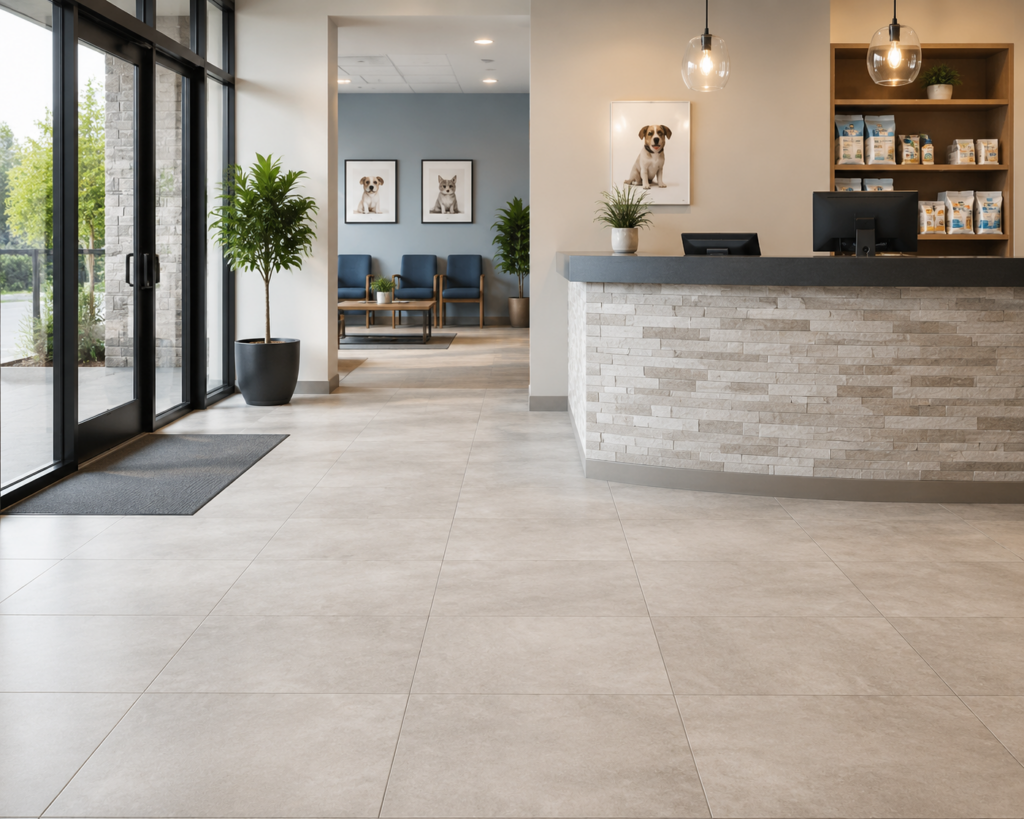
Porcelain Tile Flooring is a good flooring material that can be specified for a Veterinary hospital or an animal shelter where cold parts of the country have snowy and icy conditions. Entrances will receive products like “Ice-Melt” (or snow salt), and these salt crystals are abrasive and can scratch polished floors very easily.
The tile can be specified as an approved slip resistance factor specifically for entrances & restrooms. We also specify an epoxy grout, which has significantly greater bond strength and compression strength over cementitious grouts. It is also very stain-resistant.
Advantages
Easy to Keep Clean
Cleanliness is one of the most important things in a hospital. Every surface needs to be easy to disinfect so germs, bacteria, and viruses don’t spread. Hospital tile floors are non-porous, which means they don’t absorb liquid. If there’s a spill, whether it’s water, blood, or cleaning chemicals, staff can wipe it up fast without damaging the surface or leaving behind stains.
How often does it need to be cleaned? Hospitals clean their floors multiple times a day. Tile withstands that constant cleaning without wearing down.
Tile is also chemical-resistant, which means powerful hospital-grade cleaners won’t break it down over time. In high-risk areas like operating rooms, bathrooms, and labs, this makes a huge difference.
Bonus Tip: MD Architects specifies epoxy grout between the tiles. This special grout is made to fight off mold, mildew, and bacteria. It adds another layer of protection and helps keep the space even safer for Hospitals and Shelters.
Long-Lasting Durability
Specialty Veterinary Hospitals never close; they operate 24/7, every day of the year. That means the floors are always being used. You need something that can handle that level of wear and tear, and tile does just that.
Why does tile last longer?
- Porcelain and quarry tile are especially tough
- They resist cracking, denting, or wearing down, even in high-traffic zones
- They can handle the weight of hospital beds, rolling carts, and heavy equipment
This kind of durability means you won’t have to replace the flooring often. That saves money in the long run and keeps disruptions to patient care at a minimum.
What’s the lifespan of a hospital tile floor?
When installed and maintained properly, tile floors can last 20 years or more—even in the busiest parts of a hospital. That’s a smart investment for any healthcare facility.
Slip and Fall Prevention
Safety is another major concern in vet hospitals and animal shelters…and dogs don’t particularly like walking on a slippery floor.
With that in mind, MD Architects will specify tile that has a texture or matte finish to improve traction.
Attractive Design Options
Tiles come in a huge variety of styles, colors, and patterns. You can even get tiles that look just like hardwood, stone, or natural textures—without losing the durability and easy maintenance of tile.
Disadvantages
Underfoot Fatigue
The hard, rigid surface of porcelain can cause fatigue for medical staff who are on their feet for long shifts. This is also why we don’t recommend it in working areas of the facilities.
Noise Transmission
Hard surfaces can echo, increasing noise levels. This makes it more difficult to meet acoustic comfort standards compared to resilient flooring options such as sheet vinyl or luxury vinyl tile.
Installation Requirements
The installation process is intensive. Subfloors must be perfectly prepared, and specialized grout and adhesives are required to support the heavy loads and moisture.
Maintenance of Grout Lines
While the porcelain itself is easy to wipe down, daily damp-mopping is required, and the grout lines would need cleaning; however, with the epoxy grout that we specify, it would not be as often as typical grout joints.
Recommended Locations:
- Vestibules & lobbies
- Restrooms
- Hallways
- Exam Rooms
5. Epoxy Hybrid Resinous
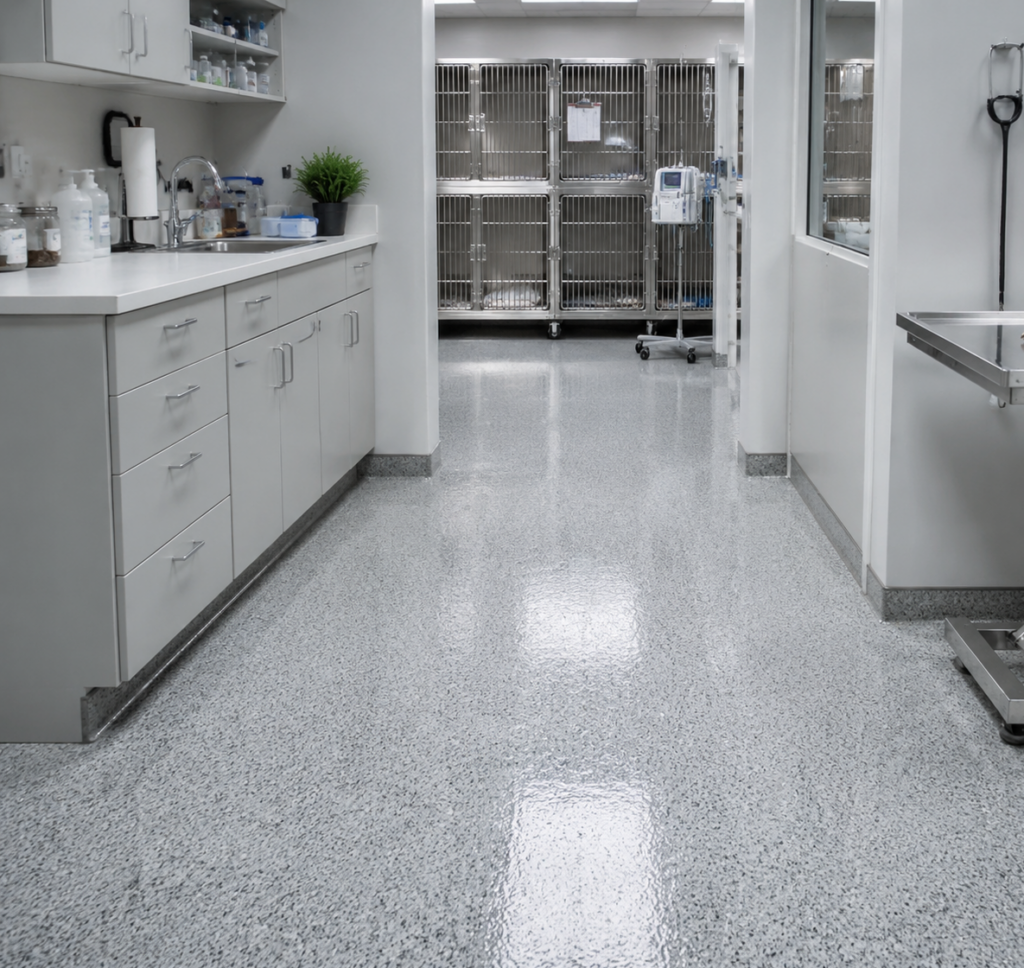
For installations that require a chemically resistant surface that can withstand exposure to hazardous chemicals and heavy-duty wear on floors, an epoxy hybrid flooring material is often the best option. Due to some of these demands, some epoxy surfaces may only last up to 10 years.
Advantages
Durability
Epoxy flooring is relatively scratch-resistant, especially compared to other flooring types. However, while it can withstand normal wear and tear, it’s not scratch-proof under heavy or sharp objects.
Seamless and Hygienic
Epoxy flooring is poured in place, creating a completely seamless surface. Without grout lines or joints, there are no hiding places for bacteria, dirt, or moisture—making it easier to clean and disinfect.
Moisture & Stain Resistant
Veterinary clinics & animal shelters use harsh cleaning chemicals and encounter animal-related messes daily. Epoxy stands up to chemical exposure without staining or degrading.
Slip Resistance
Epoxy can be installed with custom textures to provide traction, helping reduce the risk of slips and falls for staff, clients, and patients.
Sterile Environment with Integral Epoxy Cove Base
The epoxy product can be installed up the wall to create a seamless floor-to-wall transition, for a more sterile environment/fewer joints to hold dirt (coving the base, however, is not required and is a more expensive option).
Disadvantages
High Upfront Costs
Epoxy flooring often requires significant upfront financial investment. Especially if the existing concrete slab is in poor condition.
Disruption for Renovation Projects
The installation process takes time and requires the facility to be completely vacated. The strong fumes and chemical odors released while the epoxy cures can be highly toxic and should absolutely not be inhaled by humans or animals. You generally must keep the area clear for 24 to 72 hours, depending on the temperature and humidity.
Hardness and Sound
Epoxy is a very hard surface, which can make it uncomfortable for animals, especially larger, older, or arthritic dogs—to lie on for extended periods. The hard, reflective surface does not absorb sound well, which can lead to increased echoing and a noisier kennel environment, potentially causing more stress for the animals.
Recommended Locations:
- All animal holding rooms
- All dog flex & intake areas (shelters)
- Animal training & evaluation room
- Medical, procedure & surgery rooms
- Isolation rooms
6. Luxury Vinyl Tile (LVT)
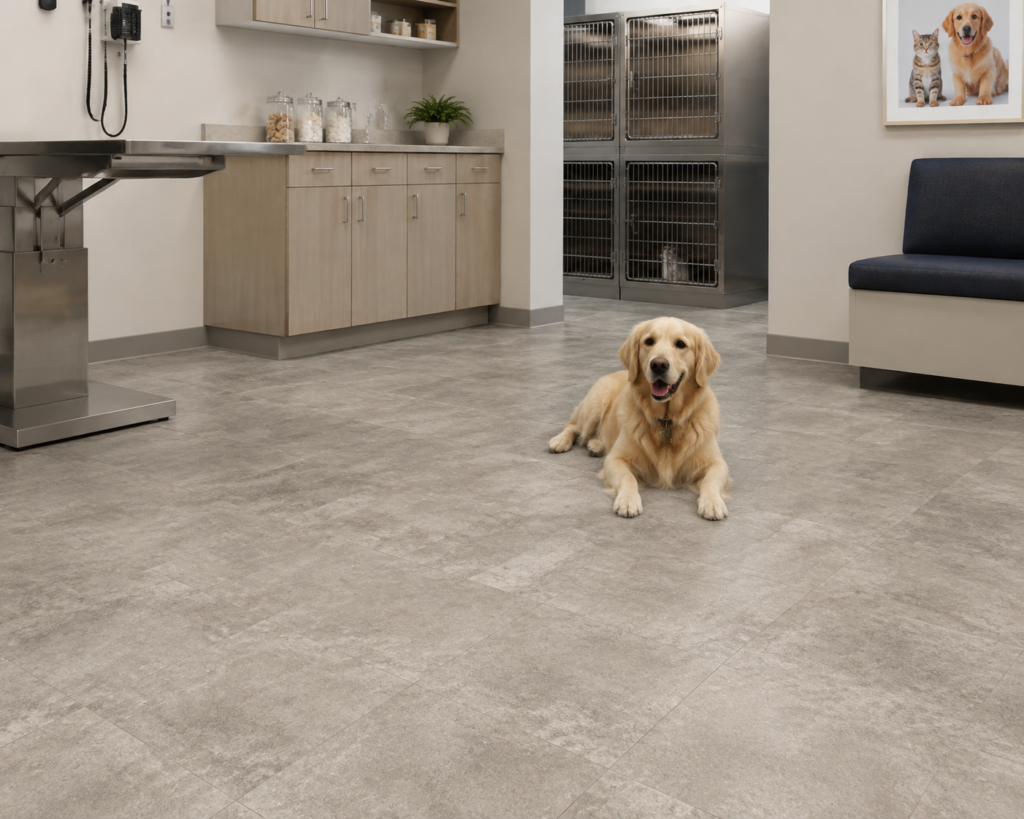
Durability, aesthetics, and maintenance are key considerations when choosing the right flooring for commercial spaces.
Luxury vinyl floors have become popular for businesses, offering an excellent balance of practicality and style. Whether you install it in front-of-house areas or back-of-house areas, like offices, it can provide the durability and design flexibility you need.
Advantages
Exceptional Durability
Commercial spaces endure high foot traffic daily, and luxury vinyl floors are designed to handle the challenge. Luxury vinyl planks have a strong wear layer that resists scratches, dents, and stains, making them ideal for busy environments.
Versatile Design Options
Luxury vinyl floors mimic the look of natural materials like hardwood or stone, offering a high-end appearance without maintenance challenges. The design possibilities are endless, from modern, sleek tones to rustic wood grains.
Water Resistance
Spills and moisture are inevitable in commercial settings. Luxury vinyl planks are highly resistant to water, ensuring they remain in excellent condition even in areas prone to moisture, such as restrooms or entryways. However, the seams are not resistant to water since they are not heat-welded seams.
Ease of Maintenance
Maintaining luxury vinyl floors is simple. Only regular sweeping and occasional mopping are required to keep them looking pristine. This low-maintenance feature saves time and effort, especially in high-traffic spaces.
Cost-Effective Solution
Luxury vinyl plank flooring installation is more budget-friendly than other commercial flooring options. It provides the upscale look of hardwood or stone at a fraction of the cost, making it an attractive option for business owners.
Disadvantages
Possible Color Fading
The potential for fading in direct sunlight, the inability to be refinished, a less-than-authentic feel, and potential subfloor telegraphing.
Scratch & Gouge Vulnerability
While LVT performs well against heavy foot traffic, it is not indestructible. Sharp objects, glass, rocks, or dropping heavy tools can scratch or puncture the material.
Seam Sensitivity
Click-lock systems can leave microscopic gaps. If liquids sit on the floor, they can seep through and cause subfloor deterioration or mold.
Cannot Be Refinished
When real wood or engineered floors scratch, they can be sanded and refinished. LVT cannot be refinished. Once the wear layer wears down, the entire floor must be replaced.
Tile Seams
LVT tiles are not sealed, which, depending on the location, can be considered a negative; however, it does make it easier to replace one tile or plank at a time.
Recommended Locations:
- Front of house entries & lobbies
- Exam rooms
- Break rooms
7. Sheet Vinyl Flooring
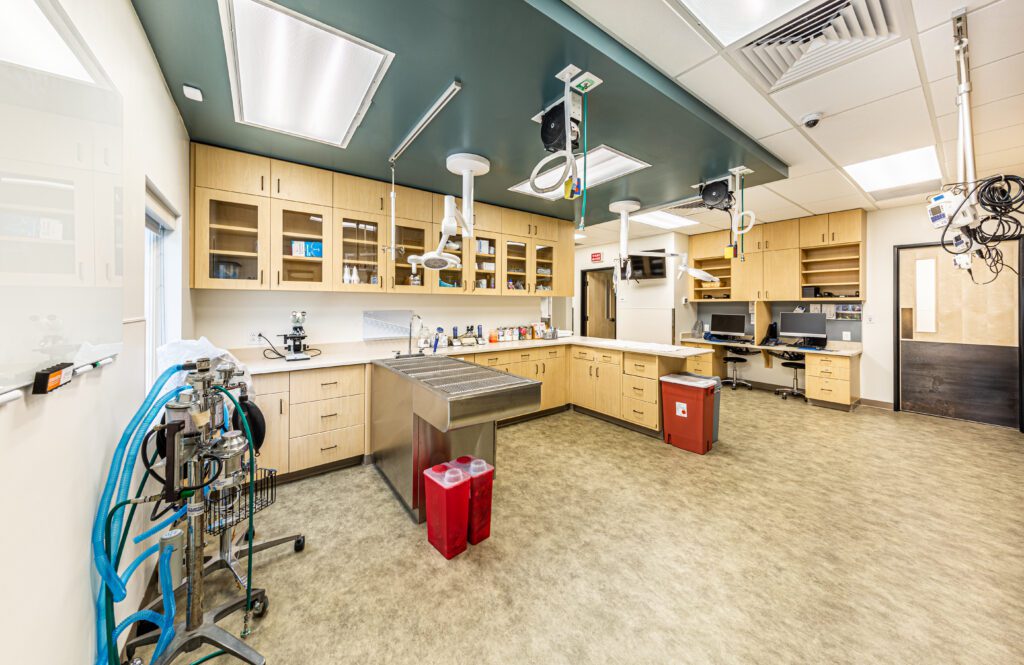
Commercial Sheet Vinyl (or resilient flooring) has been around for decades and is made up of a printed pattern top layer on top of a flooring substrate. It comes in a single roll that is 6-12 feet wide. This limits the number of seams seen after installation. It is completely impermeable to water.
Sheet vinyl comes in many looks, like wood, stone, and slate, or can take on custom patterns by your designers.
Advantages
Hygienic & Seamless
Continuous sheets (often manufactured in widths up to 16 feet) significantly minimize visible seams. When heat-welded, it provides an impenetrable surface that is critical for maintaining sterile environments like surgical suites and healthcare facilities.
Moisture & Stain Resistant
The continuous surface is highly impermeable, protecting the subfloor from spills, moisture damage, and bacterial growth.
Comfortable Underfoot
Compared to hard surfaces like ceramic or stone, sheet vinyl is softer, warmer, and absorbs sound, making it easier for staff to stand on for long periods.
Design Versatility
Available in a wide array of styles, including photo-realistic wood and stone, as well as abstract or corporate patterns.
Coved up the Wall
Can cove sheet product up the wall; therefore, a separate base material is not required and will allow for a more sterile environment / fewer joints to hold dirt (coving the base, however, is not required and is a more expensive option).
Disadvantages
Difficult and Costly to Repair
Unlike modular flooring—such as Luxury Vinyl Tile (LVT) where a single damaged plank can be swapped out, sheet vinyl repairs often require cutting out and replacing the entire section.
Labor-Intensive Installation
The large, continuous rolls require precise handling and expert heat-welding of the seams, making the overall labor cost higher.
Exact Subfloor Preparation
Because sheet vinyl is flexible, it will easily “telegraph” or show subfloor imperfections. Any bumps, dents, or debris require the subfloor to be meticulously smoothed out before installation.
Vulnerable to Punctures
Though the wear layer is highly scratch-resistant, the material can still be punctured by sharp, heavy objects or rolling loads
Recommended Locations:
- Back-of-house medical, treatment & surgery areas
- Offices
- Break rooms
- Hallways
- Restrooms
8. Rubber Flooring
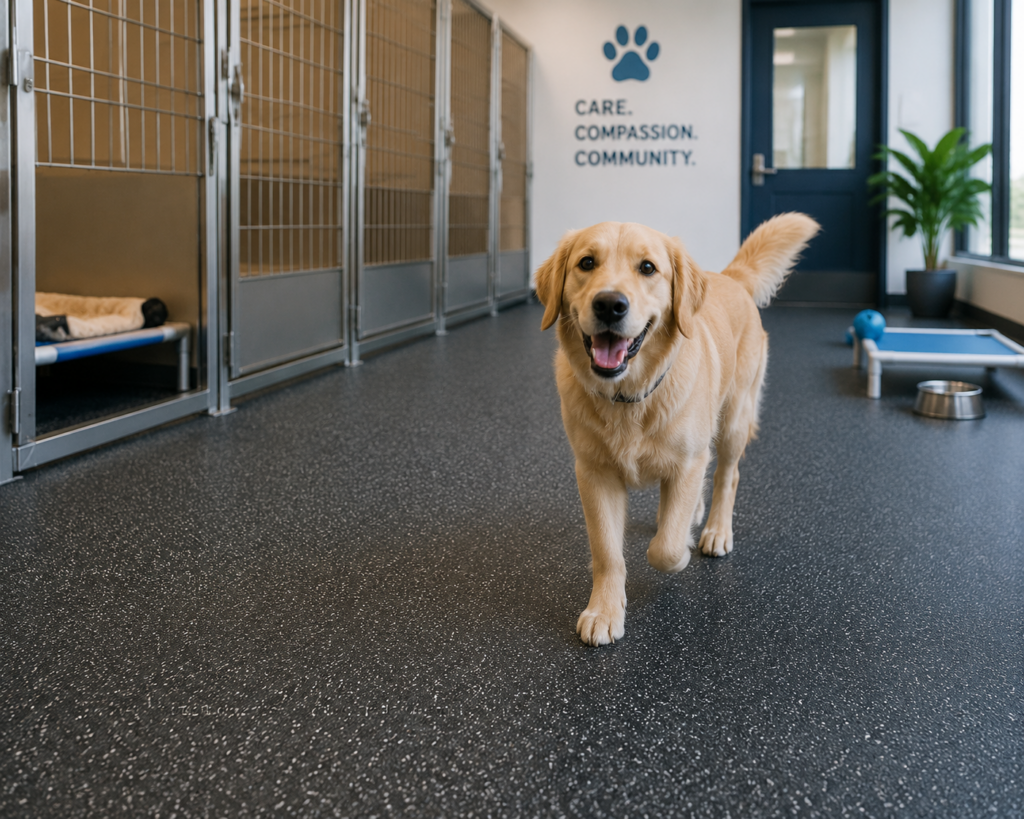
Commercial rubber flooring is an exceptionally durable, slip-resistant, and shock-absorbing option ideal for providing a cushion that protects your dog’s joints. While it offers excellent long-term value, comfort, and noise reduction, it comes with a higher upfront cost and a distinct initial odor.
Advantages
High Durability
It can easily withstand heavy foot traffic, rolling loads, and dropped weights. It easily withstands heavy wear, tear, and scratches from dog nails. Vulcanized rubber is incredibly dense and can last 20+ years.
Safety & Comfort
Naturally slip-resistant, it provides a safe surface even when wet. Its shock-absorbing nature reduces fatigue for employees standing for long periods.
Joint and Paw Comfort
Rubber absorbs shock, making it easier on the paws, muscles, and joints of older dogs or those with arthritis.
Slip Resistance
Its natural grip reduces dangerous slips and falls for both energetic puppies and dogs with mobility issues, as well as people too.
Acoustic & Thermal Insulation
Rubber absorbs sound effectively, which cuts down on echo in large commercial spaces. Rubber effectively dampens the sound of running, playing, or barking dogs.
Disadvantages
Higher Initial Cost
Rubber flooring carries a steeper upfront price tag compared to alternatives like vinyl. It requires a completely smooth, perfectly level subfloor; otherwise, imperfections will telegraph through the rubber.
Initial Odor
Freshly laid commercial rubber (especially recycled rubber) may have a distinct rubbery smell, which can be strong for a dog’s sensitive nose initially.
Cleaning and Maintenance
While rubber is naturally water-resistant, it can be porous if not sealed, potentially trapping liquids and bacteria. Using a Flooring Inc. Rubber Mat Sealant or a veterinarian-approved mat sealant is recommended to keep the floor sanitary and water-resistant.
Recommended Locations:
- High-traffic areas
- Treatment & procedure rooms
- Agility training rooms
- Physical therapy rooms
Written By MD Architects
MD Architects is a full-service, relationship-based firm dedicated to providing superior planning, design, specifications, and construction guidance to animal care, human healthcare, and commercial industries.
August 10, 2026